


I keep running into the same pattern in my work, and it is not “you need more willpower.” It is mixed signals. If you read this, you will leave with a name for what is happening (mixed sleep cues), the flip that actually changes things (training signals instead of chasing sleep), and a real decision point you can take into tonight: what you are willing to make boringly consistent, even when your mood, family, or schedule argues with you. That is often how people sleep better and improve sleep quality fast, without turning bedtime into a project.
I keep coming back to this because a lot of writing on how to sleep better tends to split in predictable ways. It either leans into vague encouragement or it piles up tips the way you would collect items for a cart. The people I sit with are usually beyond that point. They are exhausted. They have tried “sleep hygiene.” They still cannot fall asleep, cannot stay asleep, or wake up feeling oddly wired. What usually helps, in my experience, is not adding more hacks. It is reducing the contradictions your brain and nervous system are swimming in.
Learning how to sleep better is one of the most powerful ways to improve your mental, emotional, and physical health. As a psychologist, I see every day how poor sleep does more than make you tired. It affects your mood, sharpens or dulls your cognitive abilities, influences stress levels, and changes how your body functions overall. When people struggle with falling asleep, staying asleep, or waking unrefreshed, it is often because the brain and body are receiving mixed signals about when it is time to rest.
Sleep is not simply “shutting down.” It is an active biological and psychological process where your brain repairs cells, balances hormones, processes memories, and resets your emotional circuits. Without high-quality sleep, these essential functions weaken. The good news is that sleep can be retrained. By understanding the science of sleep and consistently applying simple, evidence-based techniques, you can improve sleep quality in realistic and lasting ways.
This guide blends psychological research, practical sleep hygiene strategies, and everyday language so it stays usable. Below are 12 methods that help regulate your internal clock, calm your mind, and rebuild healthier sleep patterns, no medication required.
What Sleep Is and Why It Matters
Sleep is not passive downtime. It is a biological and psychological restoration process. During sleep, the brain repairs cells, balances hormones, processes memories, reduces stress chemicals, and resets your emotional and cognitive systems. Good sleep strengthens immunity, improves mood, enhances mental clarity, stabilizes metabolism, and protects long-term heart and brain health.
I do not usually see sleep problems arrive alone. They show up in the way a parent snaps at a child over something tiny, then lies awake replaying it. In siblings who suddenly cannot tolerate each other’s noise. In a student who is steady all day and unraveling at night. A coworker who starts reading neutral messages like threats. In a manager who thinks they are being “direct” and is actually just running low on capacity. Even in caregiving situations, where the care recipient cannot settle, and the caregiver becomes hypervigilant, both nervous systems are trying to keep each other safe and failing in that familiar 2 a.m. way.
Many people struggle with sleep due to stress, overthinking, irregular routines, late-night screen exposure, or misaligned circadian rhythm. These disruptions confuse your internal sleep clock and keep your nervous system in alert mode, even when your body needs to rest.
The good news is still true: sleep can be retrained. The strategies below show exactly how to sleep better and improve sleep quality fast in realistic steps.
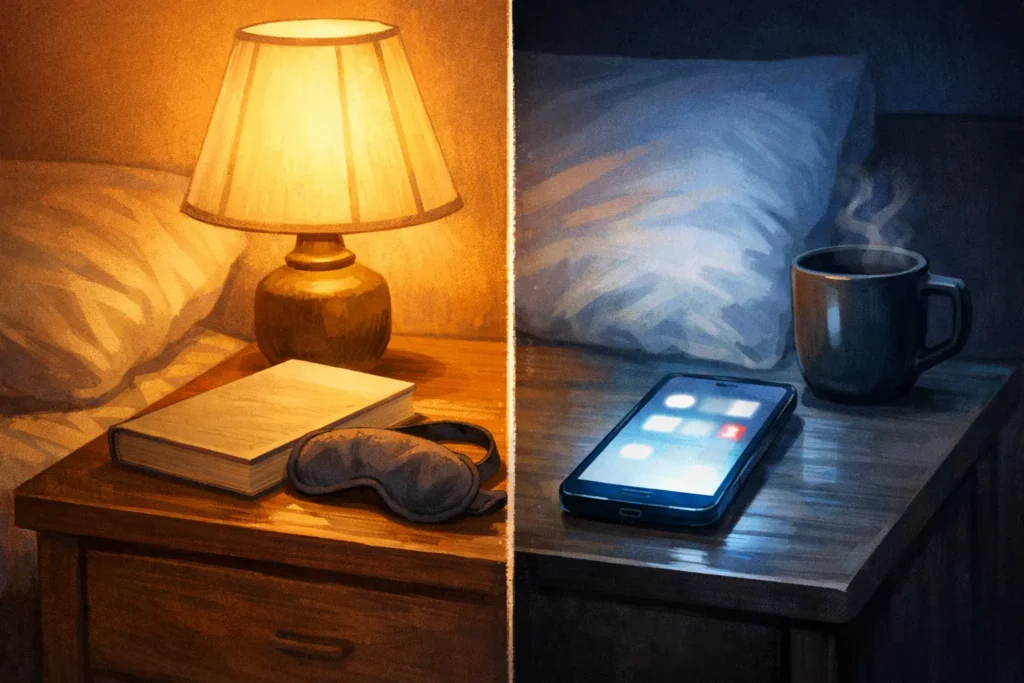
How to Sleep Better: 12 Proven, Psychologist-Backed Strategies
Each method below includes scientific insight, simple explanations, and realistic habits you can apply today. The spine of the whole thing is simple: reduce mixed cues. That is the job.
1. Maintain a Consistent Sleep and Wake Schedule
Your circadian rhythm operates on patterns. Irregular wake times confuse it, leading to daytime fatigue, mood instability, and trouble falling asleep.
Why it works:
A consistent wake-up time strengthens your internal clock, making your body naturally sleepy at night.
In simple terms:
Waking at different times feels like switching time zones. Keeping the same wake-up time, even on weekends, helps your body find its natural sleep rhythm.
How to apply it:
- Choose one wake time and stick to it
- Place your alarm across the room
- Get sunlight within 10 minutes of waking
This is one of the most essential steps to improve sleep quality naturally.
I have seen this matter for people who do not think they “have” a schedule. New parents. Students. People sharing a room with siblings or roommates. Households where mornings start when the household starts. Even then, there is usually something you can anchor. Not perfect. Just consistent enough that your body stops guessing.
2. Create a Wind-Down Routine to Calm the Mind
Your brain needs a transition period between day mode and sleep mode.
Why it works:
Calming activities lower cortisol and signal to the brain that wakefulness is ending.
Put another way:
Your mind cannot shut off instantly. Think of wind-down time as slowing the car before parking.
Try this 30-minute routine:
- First 10 minutes: lower lights, disconnect from screens
- Next 10 minutes: warm shower, stretching, slow breathing
- Final 10 minutes: journaling, listening to soft audio, or reading
This is a game-changing habit when learning how to sleep better tonight.
For example, this could apply to a teacher who spends the evening answering students, then expects their body to downshift on command. Or a caregiver finishing meds and forms and then lying down with a racing mind. Or roommates who decompress by swapping stories that are funny but also activating. The routine is not about being virtuous. It is a cue. A predictable ramp-down.
3. Reduce Blue Light One Hour Before Bed
Blue light delays melatonin release, keeping your brain alert.
Why it works:
Lowering light exposure lets melatonin rise naturally.
To clarify:
Looking at screens at night makes your brain think it is daytime.
Try this:
- Avoid screens 45 to 60 minutes before bed
- Use warm or red light filters
- Remove devices from the bedroom
This is one of the fastest ways to sleep better without medication.
Change in 2015 is one of those studies I still think about because it was not moralizing screens. It was about the body reading light as instruction. If you are a student on late group chats, a coworker doomscrolling, a parent reading school messages in bed, or someone in a long-distance relationship trying to catch the other person’s time zone, it is easy to see how “one hour” evaporates. The tradeoff is blunt: stimulation and connection now, or easier sleep later.
4. Make Your Bedroom a Sleep-Only Environment
Your brain forms associations with spaces.
Why it works:
Stimulus control trains your brain to link the bed with sleep.
Simply put:
If you work, scroll, or eat in bed, your brain thinks it’s awake time, not sleep time.
Optimize your room:
- Keep the temperature between 60 to 67°F
- Use blackout curtains
- Use white noise if needed
- Only use your bed for sleep and intimacy
If you cannot fall asleep within 20 to 30 minutes, get out of bed until you feel sleepy again.
This is the part people argue about. I get it. If you live in a small space, share a room, or you are in a busy extended family home, a “sleep-only environment” can sound unrealistic. So I tend to reframe it as reduce how many awake activities happen in the exact place where you want your nervous system to soften. Even one change helps.
The American Academy of Sleep Medicine guideline group, with Edinger in 2021, keeps emphasizing behavioral treatments like stimulus control for a reason. It works often enough that it shows up again and again, even when patients do not like it at first.
5. Make Evening Eating and Drinking Sleep-Friendly
Food and drink choices directly impact sleep.
Why it works:
Late eating, alcohol, and caffeine disrupt digestion and sleep cycles.
Another way to see it:
Coffee lingers for hours. Alcohol wakes you up later. Big meals cause discomfort when lying down.
Better habits:
- Stop caffeine by early afternoon
- Eat your last big meal 2 to 3 hours before bed
- Avoid alcohol as a sleep aid
- Reduce water 2 hours before sleep
These changes significantly improve sleep quality.
Drake in 2013 is the one I find myself recalling because it makes the point inconveniently clear: caffeine can still interfere with sleep even when you take it earlier than you think “counts.” The person who only drinks coffee at 4 p.m. because work is relentless. The manager who treats caffeine as basic equipment. The student who thinks they are immune because they feel sleepy anyway. Sleep does not care about our stories.
6. Move Your Body During the Day
Exercise increases deep sleep and lowers stress.
Why it works:
Movement builds healthy sleep pressure and reduces nighttime restlessness.
To explain it briefly:
Being active makes your body naturally tired at bedtime.
Best ways to do this:
- Daily walks
- Stretching or yoga
- Light cardio
- Avoid high-intensity workouts at night
Kredlow (2015) is useful here because it does not pretend exercise is magic, but it does show a real association with sleep outcomes. The practical version looks different depending on context. Coach-athlete schedules. Teammates are training late. Coworkers who can only walk at lunch. Parents who get movement by carrying a child upstairs and calling it a workout. The point is still the same: your body needs enough daytime use that nighttime rest makes physiological sense.
7. Calm Mental Overactivity Before Bed
Overthinking is one of the strongest predictors of insomnia.
Why it works:
Relaxation techniques lower mind activity and quiet your stress response.
To simplify:
Nighttime silence often makes your thoughts louder. That makes it harder.
Tools that help:
- Write your thoughts down before bed
- Tense and relax muscles gradually
- Use box breathing (4-4-4-4 pattern)
Mastering these tools helps anyone wondering how to sleep better with anxiety.
Harvey, in 2002, shaped how I think about this, not because the model is perfect, but because it describes the loop I keep seeing: worry about sleep creates arousal, arousal delays sleep, and then the delay becomes evidence that something is wrong. I have watched it happen after family conflict, after a hard day in school, after a tense meeting at work, and after a falling-out with a friend. Sometimes after caregiving. The mind picks a theme and refuses to release it.
The journaling part is not inspirational. It is mechanical. Park the thoughts somewhere else, even if it is messy.
8. Keep Naps Short and Early in the Day
Naps affect your sleep drive.
Why it works:
Long or late naps lower your natural sleepiness at night.
In simplified terms:
It is like snacking before dinner. Too much, and you will not be hungry for the main meal.
Healthy napping:
- Keep naps under 20 to 30 minutes
- Nap before 3 PM
This might show up with students juggling school and tuition, people working split shifts, caregivers grabbing sleep when they can, or anyone living in a loud household where nighttime sleep gets interrupted by someone else’s needs. In those settings, naps feel like survival. The trick is keeping them small enough that they do not steal from the night.
9. Avoid Caffeine, Nicotine, and Alcohol Before Bed
These substances interfere with your sleep cycle.
Why it works:
They block deep sleep, activate the brain, and cause fragmented rest.
To make it clear:
Coffee and nicotine wake you up. Alcohol puts you to sleep but wakes you later.
Cutting them improves sleep dramatically.
I have had people tell me alcohol is the only way they can tolerate quiet, especially after social stress or workplace pressure. I understand the logic. Physiologically, it tends to backfire.
10. Avoid Heavy Meals Too Close to Bed
Large meals interfere with rest.
Why it works:
Digestion competes with your body’s natural sleep preparation.
Put shortly:
Going to bed full can cause discomfort, bloating, or reflux.
Finish eating earlier to improve sleep quality naturally.
In family settings, this is the one that gets complicated fast. Dinner happens when everyone is finally home. In some households, it is the only time people talk. With roommates, it is the only time the kitchen is free. With siblings visiting, food becomes the event. So “finish earlier” can feel tone-deaf. Still, the body is consistent even when our lives are not.
11. Reduce Water Intake Before Bed
Nighttime awakenings break sleep cycles.
Why it works:
Fewer bathroom trips equal deeper, more continuous sleep.
Said simply:
Drinking too much water before bed means getting up when your body wants to stay asleep.
Hydrate earlier in the day.
This comes up a lot with teachers and healthcare workers who barely drink all day and then try to make up for it at night. Also, with people managing medications or caretakers timing fluids. It is not about restricting water as a rule. It is about moving the timing so your sleep does not get chopped into pieces.
12. Seek Professional Help When Needed
If nothing helps, your sleep system may need expert evaluation.
Why it works:
Some conditions require guided treatment, such as CBT-I, which research shows is more effective than medication for many people.
In brief:
If you have tried everything and still cannot sleep, it does not mean you are failing. It may mean you need a different type of support.
This is where I am careful, because “seek help” can sound like a brush-off. I mean something specific. Trauer in 2015 found strong effects for CBT-I across studies, and Qaseem in 2016 wrote the American College of Physicians guideline that recommends CBT-I as first-line for chronic insomnia disorder. The American Academy of Sleep Medicine guideline, with Edinger in 2021, also supports behavioral and psychological treatments.
And sometimes the sleep problem is not classic insomnia. Breathing issues. Medication effects. Depression. Trauma. Chronic pain. If you are waking up gasping, snoring loudly, or feeling wrecked no matter what you do, that is not the moment for another checklist.
Final Thoughts on How to Sleep Better
Difficulty sleeping is not a flaw. It is often a sign your nervous system is overwhelmed or confused about safety and timing. Sleep can be retrained through consistent habits, routines that make your body feel safe enough to downshift, and fewer contradictions.
I say “safe,” and I know it can sound soft. But in practice, it is concrete. The bed becomes a place of struggle, or the night becomes a place where old arguments replay, or the body stays on alert because the household is unpredictable, or because work still feels unfinished, or because caregiving never really ends. In those situations, the question is rarely “what’s wrong with me?” It is more like this: what cue am I still giving my body that says, “Stay ready”?
And sometimes I do not know the cue until someone tells me what their evenings actually look like, not the ideal version. The last message they read. They are still having issues with a sibling in their head. The way they keep checking on a parent. The way they fall asleep is fine, but wake at 3 a.m. and start solving tomorrow. The way they use the phone to calm down, then end up waking themselves back up. The way the nervous system learns patterns faster than we do, and then we are surprised when it keeps repeating them, and we keep repeating them too, and at some point, you either change the signal or you keep negotiating with the same night.
FAQ: How to Sleep Better
| Question | Answer |
| 1. What is the best way to sleep better naturally? | Regulate your circadian rhythm, wind down before bed, reduce blue light, and optimize your bedroom. These are the fastest natural ways to improve sleep quality. |
| 2. Why is sleep so important for health? | It supports emotional regulation, cognitive performance, metabolism, immunity, and long-term health. Poor sleep increases stress, anxiety, and disease risk. |
| 3. How can I fall asleep faster when my mind is racing? | Use journaling, muscle relaxation, and box breathing to calm mental activity and signal the body to rest. |
| 4. How long before bed should I turn off screens? | At least 45 to 60 minutes. Blue light delays melatonin and makes sleep harder. |
| 5. What is the best temperature for sleep? | Between 60 and 67°F for deeper, uninterrupted rest. |
| 6. Does exercise help sleep? | Yes. Regular movement improves deep sleep and reduces the time to fall asleep. |
| 7. Is caffeine harmful for sleep? | Yes. Stop caffeine by early afternoon to protect your sleep cycle. |
| 8. What foods should I avoid before bed? | Large meals, sugar, spicy foods, and heavy snacks. |
| 9. Why do I wake up during the night? | Stress, late eating, alcohol, inconsistent routines, or an overheated room often cause awakenings. |
| 10. When should I seek help for sleep problems? | When insomnia lasts longer than 3 months, or you experience snoring, gasping, or overwhelming fatigue. |
References
Chang, A-M., Aeschbach, D., Duffy, J.F., Czeisler, C.A. (2015). Evening use of light-emitting eReaders negatively affects sleep, circadian timing, and next-morning alertness. Proceedings of the National Academy of Sciences.
DOI page | PubMed
Drake, C.L., Roehrs, T., Shambroom, J., Roth, T. (2013). Caffeine effects on sleep were taken 0, 3, or 6 hours before going to bed. Journal of Clinical Sleep Medicine.
DOI page | PubMed
Edinger, J.D., Arnedt, J.T., Bertisch, S.M., et al. (2021). Behavioral and psychological treatments for chronic insomnia disorder in adults: An American Academy of Sleep Medicine clinical practice guideline. Journal of Clinical Sleep Medicine.
DOI page | PubMed
Harvey, A.G. (2002). A cognitive model of insomnia. Behaviour Research and Therapy.
Journal page | PubMed
Kredlow, M.A., Capozzoli, M.C., Hearon, B.A., Calkins, A.W., Otto, M.W. (2015). The effects of physical activity on sleep: A meta-analytic review. Journal of Behavioral Medicine.
Journal page | PubMed
Qaseem, A., Kansagara, D., Forciea, M.A., Cooke, M., Denberg, T.D. (2016). Management of chronic insomnia disorder in adults: A clinical practice guideline from the American College of Physicians. Annals of Internal Medicine.
DOI page | PubMed
Trauer, J.M., Qian, M.Y., Doyle, J.S., Rajaratnam, S.M.W., Cunnington, D. (2015). Cognitive behavioral therapy for chronic insomnia: A systematic review and meta-analysis. Annals of Internal Medicine.
DOI page | PubMed