

You are probably here because something feels off and you need a clearer read on it. Not a label. Not another vague post telling you some people are just “bad at feelings.” You want to know what pattern you are actually looking at, what tends to sit underneath it, whether it can change, and what you are supposed to do next. Read this, and you should leave with a better grip on the flip that confuses people most: when emotional distance is a stress response, when it is an old protective habit, and when it has turned into avoidance that keeps costing the relationship something real.
That is the part most articles miss.
They either flatten emotionally detached people into villains or they over-explain the psychology until it stops being useful. What usually helps more is slowing the pattern down enough to see it. How to spot it. What causes it? How attachment styles shape it. How to communicate without making things worse. What to say. What not to say. Where boundaries come in. And when the problem has gotten big enough that “being patient” is no longer a serious plan. That is really the question holding the whole piece together: am I looking at someone who cannot connect well right now, someone who never learned how, or someone who is staying detached in a way that leaves me carrying too much?
This matters most in relationships, because emotional detachment in relationships rarely stays abstract for long. It turns into missed bids for connection. Flat conflict. Distance where warmth should be. A text that gets answered with logistics when you were obviously reaching for comfort. A partner sitting right there on the couch, nodding, but not really with you. Sometimes low empathy is part of that. Sometimes it is not. If that is the part you are trying to make sense of, it helps to read why some people seem to lack empathy.
The main thing I have learned, and had to relearn, is that emotional detachment is not one neat category. It can be protection. It can be overloaded. It can be an attachment history. It can be traumatic. It can be temperament. It can also become a very effective way to avoid accountability while sounding calm. Same behavior on the surface. Different engines underneath. That difference matters more than people think.

What Is Emotional Detachment?
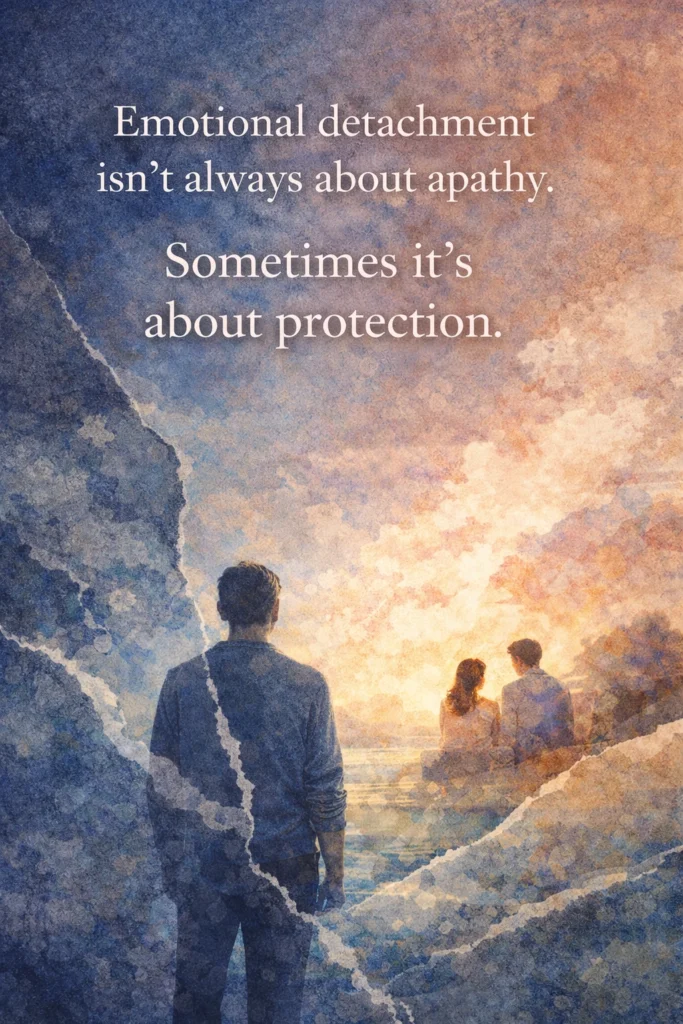
Emotional detachment is a pattern where a person has difficulty accessing, expressing, tolerating, or responding to emotion in a connected way. Their own emotions. Other people’s emotions. Sometimes both.
In plain terms, it means someone has trouble staying emotionally present with themselves or with the people around them.
They may seem calm when everyone else is upset. They may go flat during an argument. They may care deeply and still look absent. That is what makes this pattern so confusing. Emotional detachment often looks like indifference from the outside, even when that is not the whole story.
It is also not always a fixed personality trait. Sometimes it is temporary. Sometimes it is a coping style. Sometimes it is a learned way of staying safe in relationships. Sometimes it shows up during burnout, trauma, chronic stress, or depression. Sometimes it has been there so long that the person thinks it is just their personality.
I used to think of emotional detachment mostly through the lens of avoidant attachment. That was too narrow. Then I kept seeing people under brutal allostatic load who looked emotionally unavailable but were actually exhausted, dysregulated, and running on nothing. Nurses. Founders. New parents. People in grief who had not had one quiet hour in months. Same outward pattern. Different engines underneath. That changed my mind.
One person I remember was a father with a six-month-old baby, working late, sleeping in fragments, answering every emotional question from his partner like it was an operations meeting. He was not warm. He was not easy to reach. He also was not as emotionally empty as he looked. He was scorched. That distinction mattered because once the exhaustion eased, some of the distance eased too. Not all of it. Enough to matter.
This is why emotional detachment needs context.
It can show up in romantic relationships, families, friendships, and work. It changes how someone handles vulnerability, repair, closeness, accountability, and emotional reciprocity. It can also overlap with alexithymia, dissociation, hypervigilance, deactivation strategies, affect regulation problems, and a narrow window of tolerance. Not every detached person has those patterns. Enough that it matters.
Signs of Emotional Detachment
Emotionally detached people do not all behave the same way. Still, the pattern gets recognizable once you know what to look for. Usually not through one dramatic scene. Through repetition. The same kind of mistake, over and over, until you realize it is not random.
They avoid emotional conversations.
This is usually the first thing people notice.
The conversation starts to get real, and suddenly the person changes the subject, gets distracted, becomes sarcastic, or starts talking logistics. You say, “I felt really alone this week,” and they answer, “Did you book the appointment?” It is a pivot away from emotion.
This might show up with a teenager who shrugs and says “I’m fine” every time home gets tense. Or with a spouse who can plan a holiday down to the minute but goes quiet the second hurt enters the room.
They seem uncomfortable with vulnerability.y
They may struggle to talk about their own feelings. They may look awkward, irritated, or numb when someone else opens up. Tenderness feels hard for them to stay with. Sodo’s fear, shame, grief, and emotional need.
Sometimes they will sit there and try. You can see them trying. They just do not know what to do with the moment once it stops being practical and starts being human. That lands differently from deliberate cruelty. It still hurts.
They appear distant during conflict.
Instead of engaging, they withdraw. They go silent. They leave the room. They act like the conversation is over because they are over talking about it. Sometimes this is a classic shutdown. Sometimes it is physiological flooding. Gottman wrote about this in 2015, and it still holds up. What looks like coldness is sometimes overloaded.
A common version is this: one person raises something painful at 10:47 p.m., the other person stares at the wall for thirty seconds, mutters “I can’t do this right now,” and disappears into sleep, work, scrolling, or some sudden need to reorganize a drawer. It is not subtle.
They have difficulty expressing affection
Some emotionally detached people care, but reassurance sounds unnatural coming out of their mouths. They may show love through tasks, favors, or problem-solving instead of warmth, softness, or verbal affirmation. The result is that other people still feel emotionally underfed.
They will fix your tire. They will pick up your prescription. They may not say, “I know that scared you.” That gap matters.
They intellectualize feelings
This one is common in bright, high-functioning people. They can analyze everything. They can explain a pattern beautifully. They can talk about emotion without actually entering it. Hurt becomes a theory. Grief becomes an abstraction. It sounds thoughtful. It is still far away.
I have changed my mind on this a bit over the years. I used to hear this kind of language and assume insight meant movement. Not always. Sometimes insight is just a cleaner place to hide.
They seem unaffected by important events.
A breakup. A death. A family crisis. A big win. A scary diagnosis. The response can be so muted that people around them interpret it as not caring. Sometimes that interpretation is right. Sometimes the person is holding everything so tightly that nothing gets through their face.
They keep people at arm’s length
They may resist dependency, closeness, commitment, or emotional reliance. They pull back when a relationship starts becoming safer and deeper. They want connection until connection starts making real demands.
This might show up with someone who is charming at the start, consistent enough to keep you leaning in, then suddenly hard to reach the moment you ask for steadier closeness. Not because the timing was bad once. Because it keeps happening.
They struggle to respond empathically
This is where a lot of people start wondering if the person just lacks empathy.
Maybe. Maybe not.
Some emotionally detached people still have decent cognitive empathy. They understand what someone else is feeling. They just cannot stay emotionally present enough to respond in a warm, connected way. That is different from having no concern at all.
What Causes Emotional Detachment?
There is usually a reason for emotional detachment. Not always a simple one. Still a reason. This is where the gentler reframe matters. Before people decide someone is cold, selfish, broken, or impossible, it helps to ask what function the distance is serving.
Stress and burnout
This gets missed all the time.
When stress becomes chronic, emotional bandwidth shrinks. People get flat. Less responsive. Less patient. Less emotionally available. Their window of tolerance narrows and everything starts to feel like one more demand. This is where cortisol dysregulation, poor sleep, nervous system overload, and chronic pressure can mimic personality traits.
What looks like detachment may actually be depletion. If this kind of flatness feels less like personality and more like depletion, why emotional exhaustion doesn’t go away fills in that picture.
For example, this could apply to someone caring for an ill parent while trying to keep a job together. They may stop sounding loving long before they stop loving people.
Past trauma
Trauma changes how people experience closeness, body signals, and emotion itself. If vulnerability once led to danger, chaos, humiliation, or abandonment, detachment can become protective. That does not make it harmless. It does make it intelligible. Van der Kolk said this clearly in 2014, though people in clinical work had been watching it happen for a long time before that.
I have watched people insist they are just “not emotional,” then slowly realize they are not unfeeling. They are braced. Big difference.
If you keep noticing that old wounds keep showing up in closeness, conflict, or emotional distance, how unresolved trauma changes relationships is the cleaner next read.
Childhood environment
If someone grew up in a home where feelings were mocked, punished, ignored, or treated as weakness, they may have learned very early that emotions are costly. Children adapt. Then adults call the adaptation a character trait.
A kid who got told “stop crying or I’ll give you something to cry about” does not usually grow into an adult who feels naturally safe with vulnerability. Not without some friction.
Fear of dependence
Some people associate closeness with loss of control. Or engulfment. Or disappointment. Or betrayal. So they keep emotional distance and rename it independence.
Learned coping patterns
This is the quiet one. What starts as protection becomes a habit. Then habit becomes identity.
A lot of emotionally detached people do not consciously decide to disconnect. They just know that emotional intensity feels unsafe, embarrassing, or unmanageable.
Personality and temperament
Some people are naturally more private, less expressive, or more internally oriented. That alone does not make them emotionally detached. But it does shape how they show care, intimacy, and distress.
Mental health factors
Depression, anxiety, trauma-related conditions, numbness, and prolonged emotional suppression can reduce emotional availability. People who are overwhelmed do not always look overwhelmed. Sometimes they just look absent.
This overlaps with the broader question of why empathy can be low, especially when development, stress, trauma, or personality factors are involved.
How Attachment Styles Affect Emotional Detachment
Attachment theory gets overused online. It still explains a lot. It just does not explain everything, and I think people get themselves into trouble when they use it like a master key.
Avoidant attachment
This is the pattern most people are describing when they talk about an emotionally detached person. Avoidantly attached people often use distance, self-sufficiency, and deactivation strategies when closeness starts to feel exposing. They may like connection in theory and resist it in practice. Bowlby laid the groundwork in 1969. Ainsworth expanded it in 1978. Mikulincer and Shaver made the adult version much easier to see in 2016.
If this is the pattern you keep running into, avoidant attachment and why some people pull away when someone gets close goes deeper into that exact dynamic.
A very ordinary version looks like this: they text all day, open up a bit, even say they want something real, then disappear emotionally right after an intimate weekend or right after you ask where the relationship is going. You start doubting yourself. Usually that is when the cycle really gets traction.
Anxious attachment
Anxiously attached people are not usually detached in the same way. They often want closeness intensely. But when anxious attachment meets emotional detachment, you get the painful pursue-withdraw cycle. One person pushes for more emotional contact. The other person retreats harder. Everyone ends up feeling misunderstood.
Disorganized attachment
This is where things get messy. A person may want closeness and fear it at the same time. They can look warm one day, shut down the next, then feel ashamed afterward. There is usually a lot sitting underneath that pattern.
Secure attachment
Securely attached people tend to be more comfortable with vulnerability, repair, and emotional interdependence. Not perfect. Just more flexible.
Attachment styles matter here. They are not the whole explanation. Emotional detachment can also come from stress, trauma, burnout, shame, or emotional skill deficits. Ryan and Deci shifted my own thinking on this in 2017. People do better with emotional openness when there is enough safety, agency, and connection. Pressure usually does not create that. It usually crushes it.
If you want the bigger map underneath all of this, how attachment styles shape relationships pulls the wider pattern together without reducing everything to one label.
Is Emotional Detachment a Coping Mechanism or Avoidance?
This is the question that changes everything.
Not because it gives you a perfect diagnosis. It does not. Because it helps you figure out whether patience is useful, whether boundaries are overdue, and whether change is even on the table.
Sometimes emotional detachment is a coping mechanism. It formed because feeling too much once felt dangerous, overwhelming, or useless. In that case, detachment is protective. Not ideal. Protective.
Other times, emotional detachment functions as avoidance. The person uses distance to dodge accountability, discomfort, vulnerability, or relational responsibility. In that case, the behavior may have understandable roots and still be causing real harm.
That difference matters because it changes how you respond.
A few questions help:
- Do they know they shut down?
- Can they reflect on it afterward?
- Do they show concern about the impact on other people?
- Are they trying to change the pattern?
- Do they only detach under stress, or almost all the time?
- Does the detachment protect them from overwhelm, or mostly protect them from responsibility?
That is usually where the picture sharpens.
A person can have good reasons for becoming emotionally detached and still need to take responsibility for what that does to other people. Both things can be true.
That sentence, honestly, is where a lot of people either get freer or get stuck. Because it stops the false choice. You do not have to decide between understanding them and seeing the impact clearly.
How to Communicate With an Emotionally Detached Person
Most people get here because they have already tried some version of explaining more, asking more, softening more, waiting more, or finally snapping. None of that feels good for long.
One example stays with me. A couple I worked with used to get stuck in exactly the same place every week. Tuesday night. Kitchen table. Around 8:30. She would say, “I need you to actually talk to me.” He would look down, rub the edge of the placemat with his thumb, and say, “I don’t know what you want me to say.” She heard indifference. He was flooded, ashamed, and hiding in silence. That did not make the silence okay. It did explain why telling him to “just be vulnerable for once” made him disappear even faster.
The goal is not to force emotional depth on command. The goal is to lower defensiveness and make honest communication more possible.
Start with observation, not accusation
Describe what you notice without turning it into a character judgment.
Instead of saying, “You never care about anything,” try, “I’ve noticed that when difficult conversations come up, you tend to pull away.”
That keeps the focus on behavior.
This might sound small. It is not. One phrasing leads to defense. The other at least leaves the door cracked.
Be direct and specific
Vague emotional hints usually do not work well here. Clear language works better.
“When I share something important and the topic changes quickly, I feel dismissed.”
That is much more usable than a long speech full of mind-reading.
Use calm timing
Trying to get emotional connection in the middle of a heated argument usually backfires. A detached person who is already activated will often detach more, not less.
Focus on needs, not motive analysis
You do not need a perfect theory of why they do this in order to communicate well.
Try, “I need more emotional responsiveness in this relationship.”
Not, “You’re cold because you don’t love me.”
Leave room for slower emotional processing
Some people genuinely need more time to identify what they feel, especially if suppression, alexithymia, or shame is involved. Time is not the same thing as avoidance. But it is also not an excuse to never come back.
Watch for willingness
This is the real test.
Not whether they say the perfect thing. Not whether they suddenly become emotionally fluent. Whether they are trying. Listening. Returning to the conversation. Taking feedback in. Making small changes consistently.
That matters more than one dramatic breakthrough.
What to Say
These phrases usually work better because they are clear, respectful, and less likely to trigger shutdown:
- “I want to understand what happens for you when conversations get emotional.”
- “I’m not asking for a perfect response. I’m asking for more openness.”
- “When you shut down, I feel far away from you.”
- “Can we talk about this without trying to solve it immediately?”
- “I know emotions may be uncomfortable for you, but this matters to me.”
- “I’m trying to connect, not attack you.”
- “What helps you stay present in conversations like this?”
- “I need honesty, even if it is brief.”
Simple language helps. Not because the issue is simple. Because clarity lowers friction.
What Not to Say
These lines usually make the pattern worse:
- “You have no feelings.”
- “You’re broken.”
- “You never care about anyone.”
- “This is just who you are.”
- “Real adults know how to talk about emotions.”
- “You’re impossible to love.”
- “Forget it, you’ll never change.”
People say things like this when they are hurt. That part is real. It still tends to push shame, defensiveness, and withdrawal through the roof.
You can be direct without being contemptuous.
How to Set Boundaries With an Emotionally Detached Person
This is where the decision part of the article really matters.
Understanding emotional detachment does not mean carrying the entire relationship by yourself. Insight is useful. Over-functioning is not.
This is where people get stuck. They become so focused on being patient, insightful, and understanding that they stop asking a basic question: What is this doing to me?
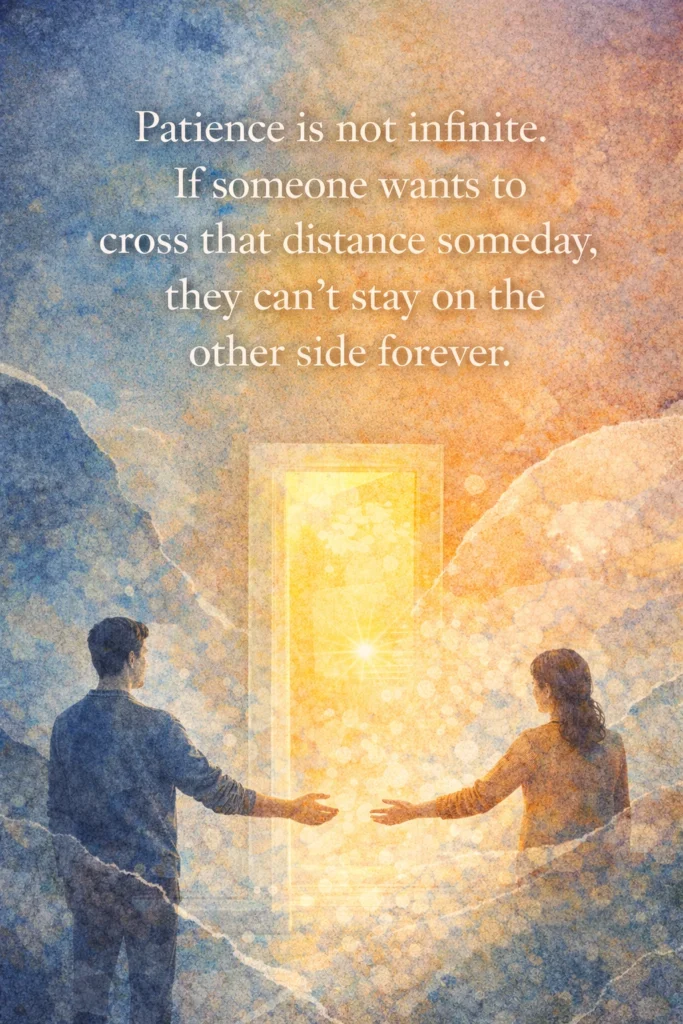
Boundaries matter because empathy without limits turns into self-abandonment fast.
Name what you need
“I need communication after conflict, not silence for days.”
That is not controlling. That is clear.
Define what you will not carry alone
“I cannot be the only person initiating honest conversations.”
Also fair.
Decide what change must look like
Understanding the cause of detachment matters. So does effort. If someone keeps saying, “This is just how I am,” while doing nothing to reduce the impact on you, that tells you a lot.
Be prepared to step back
If someone repeatedly refuses repair, dismisses your needs, minimizes your feelings, or uses emotional distance to avoid accountability, distance may be the healthiest answer.
Compassion and boundaries are not opposites. People treat them like opposites all the time. They are not.
I have seen people stay far too long because they thought understanding the wound meant they had to absorb the consequences forever. It does not.
Can Emotionally Detached People Change?
Yes. Many can.
Not all. Many.
Change usually does not happen through pressure, criticism, or emotional cornering. It happens through awareness, repetition, safety, and practice. Sometimes therapy. Often therapy.
Emotionally detached people may become less detached when they learn to:
- identify emotions more accurately
- tolerate discomfort without shutting down
- respond with empathy instead of defensiveness
- build trust in relationships
- understand the roots of their avoidance
- practice vulnerability in smaller, manageable ways
The progress is usually not cinematic. It is incremental. Staying present for five extra minutes. Coming back to the conversation later instead of disappearing completely. Naming one real feeling instead of hiding behind analysis. That counts.
And if the question underneath all of this is whether these patterns can actually shift over time, how attachment styles can change is worth reading next.
When Emotional Detachment Becomes a Serious Problem
This is where people stop asking, “Why are they like this?” and start asking, “How long can this keep going without damaging everything?”
Emotional detachment becomes more serious when it is chronic, rigid, and costly. Not just inconvenient. Costly.
A simpler way to say it: occasional emotional withdrawal is human. Chronic emotional disconnection that keeps damaging relationships is a different thing.
Signs It’s Affecting Relationships or Work
It may have become a bigger problem when you notice patterns like these:
- repeated inability to connect in close relationships
- chronic avoidance of emotional responsibility
- dismissing or minimizing other people’s feelings
- severe discomfort with intimacy
- isolation or inability to maintain closeness
- emotional numbness that affects work, parenting, or self-care
At that point, this is not just “a different communication style.” It is interfering with trust, attachment, functioning, or all three.
This is also where it helps to understand when low empathy becomes a problem in relationships and work, because the social cost can become significant even when the original cause is understandable.
When to Seek Professional Help
This does not need to be dramatic to deserve support.
Professional help makes sense when emotional detachment is causing repeated relationship pain, chronic conflict, numbness, emotional disconnection, or a sense that someone cannot access their own feelings without shutting down.
Therapy can help a person explore:
- trauma or past relational wounds
- attachment patterns
- fear of vulnerability
- emotional regulation
- depression, burnout, or numbness
- communication skills
Sometimes the work is about trauma. Sometimes it is about shame. Sometimes it is about never having learned emotional language in the first place. Sometimes it is all of those at once.
Seeking help does not mean the person is broken. It means the current strategy has gotten expensive.
Common Questions About Emotionally Detached People
Yes. Love and emotional availability are not the same thing. A person can care deeply and still struggle to show warmth, responsiveness, or vulnerability consistently. The more useful question is whether they can participate in a relationship in a way that feels safe, mutual, and emotionally real.
No. There can be overlap, but they are not identical. An emotionally detached person may understand what you feel and still struggle to respond in a present, warm, connected way. That is different from a person who consistently shows very little concern for other people’s emotional reality.
No. Trauma is one cause, not the only cause. Stress, burnout, childhood modeling, attachment patterns, depression, temperament, and long-standing coping habits can all play a role.
Emotional detachment in relationships often looks like emotional distance during conflict, limited vulnerability, low reassurance, avoidance of deeper conversations, and difficulty repairing after hurt. The person may still care. The problem is that the care does not land in a way that feels emotionally available.
Emotional detachment can be normal when it is temporary and tied to stress, grief, burnout, or a need to regulate after overload. It becomes more concerning when it is chronic, harms closeness, blocks repair, and keeps showing up across relationships or daily life.
It depends on impact and willingness. If the person is reflective, open to feedback, and actively working on the pattern, there may be room to build something healthier. If they dismiss your needs, avoid accountability, and leave you chronically alone in the relationship, that is a different situation.wd
Final Thoughts
Emotionally detached people are easy to oversimplify. Cold. Distant. Closed off. Uncaring.
Sometimes those labels fit. A lot of the time they do not tell the full truth.
Emotional detachment can come from trauma, exhaustion, shame, attachment history, chronic stress, emotional skill deficits, or habits that once made sense and then stayed too long. That complexity matters. It helps you respond more accurately. More calmly. More strategically.
But understanding the cause does not erase the impact.
That is the part worth holding onto. You can be compassionate without excusing harmful behavior. You can understand the pattern without disappearing inside it. You can give someone room to grow and still decide what your limits are.
That is usually the real work.
Ainsworth, M. D. S., Blehar, M. C., Waters, E., & Wall, S. (1978). Patterns of Attachment: A Psychological Study of the Strange Situation. Lawrence Erlbaum Associates.
Bowlby, J. (1969). Attachment and Loss, Volume 1: Attachment. Basic Books.
Gottman, J. M., & Silver, N. (2015). The Seven Principles for Making Marriage Work. Harmony.
Gross, J. J. (2015). Emotion regulation: Current status and future prospects. Psychological Inquiry, 26(1), 1-26.
Mikulincer, M., & Shaver, P. R. (2016). Attachment in Adulthood: Structure, Dynamics, and Change (2nd ed.). Guilford Press.
Ryan, R. M., & Deci, E. L. (2017). Self-Determination Theory: Basic Psychological Needs in Motivation, Development, and Wellness. Guilford Press.
van der Kolk, B. A. (2014). The Body Keeps the Score: Brain, Mind, and Body in the Healing of Trauma. Viking.