


Because that is usually the moment people start blaming themselves and or blaming everyone else. And the story in the head gets loud. Fast. If you’ve landed here because you often pull away when someone gets close, this is worth reading for one reason. It can give you a clearer explanation of what is happening inside you. And a way to move through it without disappearing, shutting down, or turning your life into a chain of quiet exits.
I am aiming at one specific problem. You care, but closeness still flips a switch, and you retreat. A lot of posts explain avoidant attachment as if it were a personality type. Neat boxes. “Here are the traits.” It looks tidy. It also misses the part that matters in real life. The timing. The body shift. The small decision point where you either vanish emotionally, or you stay in a new way. The reason I think this approach helps more is that it lines up with what attachment research keeps implying and what I keep seeing over time. Avoidance is often a regulation strategy, not a lack of love (Mikulincer & Shaver, 2010; Cassidy & Shaver, 2016). Even the APA Dictionary of Psychology descriptions point to avoidance as a recognizable pattern, not a moral failure (APA 2018).
The core question under everything here is the one I hear in different voices all the time. When closeness rises, and your body says “leave,” do you go automatically?. Or do you choose a response that protects your autonomy and the relationship? That choice is the hinge. That is where the transformation sits. Not in insight. In the next ten minutes.
One more reason this matters. People do not usually regret needing space. They regret the way they took it. The silence looked like punishment. The unread messages. The missing explanation. The small trust damage spreads out quietly.
The One Strong Idea: Pulling Away Is Often a Nervous System Strategy, Not a Lack of Love
You may enjoy the connection until it gets too close. When emotions deepen, or expectations rise, your instinct is to pull back. This doesn’t mean you don’t care. It often means closeness hasn’t always felt safe.
As psychologists, we look at this pattern through the lens of attachment. The set of emotional and physiological strategies your nervous system uses to stay safe in relationships (Bowlby 1969; Ainsworth et al. 1978; Cassidy & Shaver 2016). Avoidant attachment is not a character defect. It is often awell-trainedd protective system. One who learned long ago that the safest way to stay regulated was to rely on yoneself keep emotions tidy, and maintain control of distance (Mikulincer & Shaver,2010). I still hesitate here sometimes. “Protective system” can sound like I am excusing harm. I am not. I am trying to explain the mechanism.
And importantly, this pattern does not only show up in romantic relationships. It can shape friendships, family dynamics, workplace relationships, caregiving roles, and even the way you interact with mentors, teachers, healthcare providers, and community (Cassidy & Shaver, 2016). That is one place I think the internet misleads people. Like avoidance only “counts” if you are dating. It is broader than that. Sometimes it is most obvious at work. Or with siblings. Or with a best friend who finally asks for something real.
For example, this could apply to…
- Parent ↔ child (mother/father/guardian, son/daughter)
- Siblings (older/younger, step-siblings; cousins if relevant)
- Extended family (aunt/uncle, grandparent, in-laws)
- Teacher ↔ student (school/tuition/mentor-mentee; also coach-athlete)
- Peers (classmates, coworkers, teammates, roommates)
- Friends (close friend, childhood friend, casual friend)
- Manager ↔ direct report (workplace dynamic)
- Caregiver ↔ care recipient (including medical/support contexts)
- Community relationships (neighbors, acquaintances)
- Authority/service relationships (doctor-patient, therapist-client, consultant-client) only if your original text already touches these types of interactions
If you’ve ever thought, “I like people, but I don’t like feeling needed,” this may help you make sense of what’s happening.
Avoidant attachment is an attachment style where emotional closeness can feel overwhelming, so a person copes by minimizing needs, staying highly independent, and withdrawing when intimacy or expectation increases (Bartholomew & Horowitz, 1991; Brennan et al., 1998; Mikulincer & Shaver, 2010; APA, 2018).
Main takeaway: The goal is not to become “needy.” The goal is to become free. Able to choose closeness without feeling trapped. Able to take space without disappearing.
I will say one more thing here, slightly personal and slightly annoying. I don’t fully trust any explanation of avoidant attachment that does not include the body. You can intellectualize this forever. Many people do. I have done it. But the avoidance impulse often arrives before the story. That sequencing matters (Mikulincer & Shave,r 2010). It changes what you practice.
Also, newer reviews keep landing on the same general point. Attachment security tends to be linked with more flexible emotion regulation. Insecure patterns tend to show more strain. That comes up across different measurement approaches, not just self-report (Eilert and Buchheim 2023). I like that paper. I also do not pretend it solves causality.
And if I am being picky, a lot of what we call “avoidant attachment” in adults is measured through self-report. That is useful. It is also a limitation. People who minimize needs can minimize them on a questionnaire, too. Sometimes I trust observational and physiological work more. Sometimes those designs come with their own problems. Small samples. Artificial tasks. Tradeoffs everywhere.
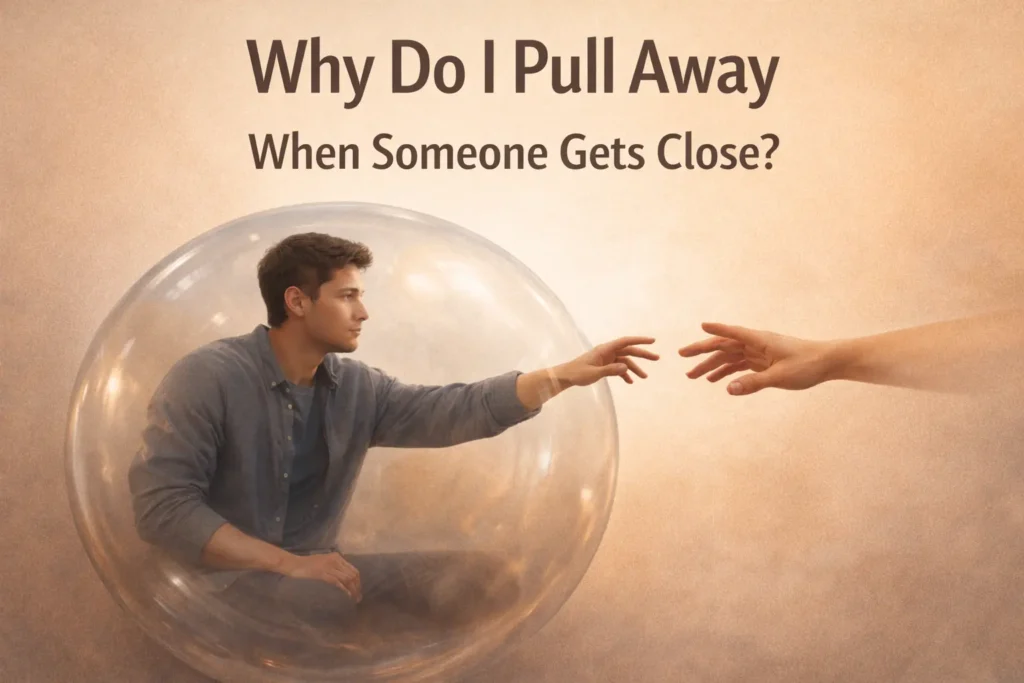
The “Too Close” Alarm: What It Feels Like Internally
Avoidant attachment is less about what you think and more about what your system does under relational pressure.
Common internal signs:
- a sudden urge to be alone
- irritation that seems out of proportion
- numbness, blankness, or “I don’t feel anything.”
- hyper-focus on flaws in the other person
- feeling watched, judged, or obligated. The thought: “This is getting messy.”
This is often the nervous system interpreting closeness as risk rather than comfort (Bowlby 1969; Mikulincer & Shaver 2010). And it fits with emotion regulation research that has been around for a while. Suppression can lower immediate discomfort. It also carries relational costs over time (Gross 1998). It is a tradeoff. Relief now. Distance later.
Sometimes people ask me, “But why do I get irritated?” I do not always know. I guess that irritation is a fast boundary emotion. It mobilizes distance. It is easier than saying “I feel exposed.” Easier than admitting you do not know how to receive care.
Why does intimacy make me feel overwhelmed?
Because your attachment system may associate closeness with pressure, loss of autonomy, or emotional danger. So distance becomes your fastest path back to regulation (Mikulincer & Shaver, 2010; Eilert and Buchheim, 2023).
What Avoidant Attachment Looks Like Across Daily Life
Avoidant attachment is often misunderstood as “cold” or “unemotional.” In reality, many avoidant-leaning people feel deeply. The difference is what happens when closeness asks for something. Time. Emotional access. Reassurance. Reliance. Accountability. Vulnerability (Mikulincer & Shaver, 2010). And yes, that sounds academic. The lived version is simple. Someone wants more access to you than feels safe.
Below are lived, everyday scenarios that clarify what many people experience.
Neutral phrasing templates (to keep examples polite and non-“AI-ish”):
- “For example, this could apply to…”
- “This might show up with…”
- “In family settings… / In school settings… / At work…”
In friendships
Scenario: A friend tells you they’ve been going through a hard time and says, “I really need you.”
You care. Maybe you even want to help. But your body tenses. Your mind starts planning an escape route.
You might respond by:
- sending practical advice instead of emotional comfort
- replying later, shorter, or with less warmth
- offering help once, then disappearing
- feeling irritated, even though you feel guilty about it
What’s underneath: “If I become someone’s safe place, I’ll be trapped.” Or, “If I show up emotionally, I’ll fail them.”
This might show up with different friend dynamics too: close friend, childhood friend, or casual friend, where the request suddenly becomes more emotionally direct.
I keep noticing a pattern here. People with avoidant strategies often do respond. They just respond in a way that keeps the emotional door narrow. Practical. Efficient. That can be care. It can also be distance. Then the friend feels brushed off. Then you feel misunderstood. Then you both stop trying.
There is another consequence people rarely say out loud. Friends start editing what they share with you. They become lighter around you. Less messy. Less honest. Not because they do not love you. Because they learned what happens when they ask for more.
In family relationships
Scenario: A parent calls and says, “Why don’t you share what’s happening in your life anymore?”
You might feel invaded, criticized, or exposed, even if the question is loving.
You might:
- Give updates about tasks (work, responsibilities) but not feelings
- change the subject
- feel like your privacy is being taken
- keep conversations “pleasant” and surface-level
- avoid asking for help even when you need it
What’s underneath: Closeness can feel like scrutiny. Emotional sharing can feel like surrendering control.
In family settings, this might show up with…
- Parent ↔ child (including adult-child dynamics)
- Siblings (older/younger, step-siblings)
- Extended family (aunt/uncle, grandparent)
- In-laws, where closeness can come with expectation or performance pressure
Family is tricky because history sits in the room even when no one mentions it. I am not always sure how much of “avoidance” is an attachment strategy versus learned family choreography. But the mechanism looks similar. Vulnerability feels expensive. It feels like it will be used against you later. Sometimes it actually was.
And sometimes the cost is not a fight. It is just a slow thinning out. Fewer calls. Fewer invitations. Less warmth. You notice it too late, and then you tell yourself you never wanted closeness anyway. That story is convenient.
At work
Avoidant attachment often looks like high competence, low dependency. And because workplaces reward competence, avoidance can look like strength. Until it doesn’t.
Scenario: A manager says, “You can come to me if you’re overwhelmed.”
You nod. You appreciate it intellectually. You never do it.
You might:
- work late rather than ask for support
- feel uncomfortable receiving praise or care
- avoid mentorship that feels emotionally close
- prefer clear roles over relational nuance
- Withdraw if feedback feels personal.
What’s underneath: “Needing help is unsafe.” Or, “If I rely on anyone, I lose power.”
At work, this might show up with…
- Manager ↔ direct report
- Coworkers and workplace peers
- Teammates on projects
- Mentor-mentee relationships (or training/supervision) where support starts to feel personally exposing
There is also a social consequence that people do not expect. Fewer workplace friendships. Less belonging. I saw a 2025 paper on workplace friendship that found attachment avoidance linked with being less likely to form friendships at work, with social positioning doing some of the explaining (Li et al. 2025). I do not treat that as destiny. But it matches what people describe. They feel safer staying a little outside.
The tradeoff shows up later. Promotions, referrals, and being pulled into interesting projects. These are often relationship-based. People with strong boundaries can still do well. But when the boundary is actually avoidance, opportunities quietly go around you.
In caregiving and helping roles
Avoidant attachment can turn people into excellent problem solvers, while quietly exhausting them.
Scenario: A sibling is struggling. You become the fixer, the planner, the strong one.
But when they cry, or want comfort, or ask for regular emotional presence, you feel yourself shut down.
You might:
- help financially but avoid emotional conversations
- handle logistics but resent closeness
- feel compassionate and numb at the same time
- become “busy” once the emotional need increases
What’s underneath: Your system may equate emotional caregiving with depletion or obligation.
This might show up with caregiver ↔ care recipient dynamics too, including medical/support contexts, where you can do tasks reliably but feel yourself go blank around emotional need.
I have sat with people who did everything for everyone. They still felt accused of not caring. Because they were giving in the language of tasks, not the language of closeness. That mismatch creates consequences. Quiet resentment. Misunderstandings. Stories in families that harden over the years.
In community and social settings
Scenario: People begin to include you more. Group chats. Invitations. Deeper conversations.
At first, it’s nice. Then it feels like too much access.
You might:
- leave messages unanswered. Stop showing up
- convince yourself you don’t like the group
- feel relieved when plans get canceled
- feel lonely later but still avoid re-engaging
What’s underneath: Belonging can trigger fear of expectation.
In community settings, this might show up with…
- Neighbors
- Acquaintances
- Roommates or social groups where access becomes assumed
- Classmates/teammates when the relationship shifts from functional to personal
This one can look like introversion from the outside. Sometimes it is. Sometimes it is the attachment system bracing for obligation. I don’t think we always know which. Pretending we do can be dishonest.
How Avoidant Attachment Develops (Without Needing a Dramatic Story)
Many people assume attachment patterns only come from major trauma. Often, avoidant attachment develops from repeated everyday experiences where emotional needs were not welcomed (Ainsworth et al. 1978; Bowlby 1969). Not always abuse. Sometimes it is the steady drip of “don’t make a fuss,” “you’re fine,” “stop crying,” “be strong.” That kind of environment trains a nervous system.
Examples:
- You were praised for being “easy,” “independent,” and “mature.”
- You learned that tears caused annoyance, punishment, or withdrawal.
- You were helped materially, but not emotionally.
- You were told to “get over it,” “don’t be sensitive,” “be strong.”
- When you sought comfort, you got problem-solving, minimization, or silence.
- You learned that needing led to disappointment. So you adapted.
- Your system learned: closeness costs. Independence protects.
This pattern is consistent with foundational attachment research in developmental psychology. Most famously the work of John Bowlby (1969) and Mary Ainsworth (1978), who described how early caregiving responses shape a child’s expectations of closeness and comfort (Bowlby 1969; Ainsworth et al. 1978). Adult attachment frameworks also describe avoidant strategies and patterns of emotional deactivation (Hazan & Shaver 1987; Bartholomew & Horowitz 1991; Brennan et al. 1998; Mikulincer & Shaver 2010). The APA Dictionary descriptions also separate avoidant forms in a way that maps onto what clinicians see (APA 2018).
I will add a caveat I keep needing to say out loud. Adult attachment research is strong in patterns and associations. It is weaker in clean “this causes that” lines once you get into adult life. People change. Context changes. Relationships change people. The evidence is useful. Not magic.
This is a practical, experience-led post. The science is here to clarify, not to pathologize.
Independence as Emotional Armor
Independence is not the problem. The problem is when independence becomes the only way you know to feel safe.
Here is what “independence as armor” looks like in daily life:
- You feel calm when no one expects anything from you.
- You do better when relationships stay light, humorous, or practical.
- You avoid asking for help until you are overwhelmed.
- You feel uncomfortable when someone is emotionally attuned to you.
- You equate “being close” with “being controlled.”
- You feel safest when you can leave at any moment.
Armor reduces vulnerability. It also reduces nourishment.
Observation from practice
In my clinical work, people rarely say, “I’m afraid of intimacy.” They say, “I just need space,” “I’m not that emotional,” or “I don’t want drama.” Often, what they mean is: my nervous system equates closeness with cost.
This connects to a broader psychological truth. Humans generally need both autonomy and relatedness to thrive (Ryan & Deci 2000). Avoidant strategies protect autonomy. They can unintentionally starve relatedness.
Sometimes I hesitate even saying “starve.” It sounds dramatic. But I keep seeing the downstream consequences. Fewer repair conversations. Fewer bids for support. A narrower emotional range in relationships. It adds up.
Also. When someone uses independence as armor, they usually cannot tell the difference between a healthy boundary and a fear boundary. Both feel like relief. Only one leads back to connection.
The Hidden Cost: Disconnection That Doesn’t Look Like Loneliness
Avoidant attachment can be confusing because many people don’t feel “lonely” in an obvious way. They may feel:
- emotionally tired
- detached
- restless
- chronically busy
- hard to satisfy
- uncomfortable with closeness, yet underwhelmed by distance
It’s a particular kind of ache. Wanting connection, but not wanting what connection demands.
A pattern I see often is this. The body feels calm in distance. The self feels smaller over time. Less supported. Less known. Less able to receive comfort (Cassidy & Shaver 2016; Mikulincer & Shaver 2010). That also shows up in research linking higher attachment avoidance with lower psychological well-being (Sagone et al. 2023). I have mixed feelings about well-being measures. They can flatten nuance. Still, the signal keeps showing up.
And the part people do not say. They start choosing relationships that require less of them. The “easy” friend. The “low maintenance” coworker. The family member who never asks anything personal. It feels calm. It also keeps you from being known.
Why You Might Pull Away From Healthy People
A common and painful pattern is that avoidant withdrawal increases in safer relationships.
Scenario: Someone is steady, kind, consistent.
Instead of relief, you feel pressure.
Why?
Because steadiness invites deeper dependence. Dependence may be what your nervous system learned to avoid. In some early environments, closeness didn’t mean safety. It meant vulnerability without protection (Ainsworth et al. 1978; Bowlby 1969).
So even healthy closeness can trigger an old alarm.
There is also a neuroscience-adjacent lens that I find useful, even if I do not overclaim it. Social support can reduce threat load and self-regulation effort for many people. But avoidant systems often expect to self-regulate alone (Coan et al. 2006; Coan 2014). That “I’ll handle it myself” posture may have been adaptive once. Then it becomes automatic.
And if I’m honest, I still catch myself admiring that posture in certain cultures. Productivity cultures. “No needs, no mess.” It is seductive. It is also lonely.
Sometimes I wonder whether the “healthy partner” problem is partly about timing. When someone is steady, it becomes harder to justify leaving. So the system has to find another route. Irritation. Critique. Distance. Anything to restore control.
How to Work With Avoidant Attachment in Real Time
The goal is not to become a different person overnight. The goal is to add flexibility to your system so that closeness stops feeling like a trap (Mikulincer & Shaver 2010). Flexibility is the word I trust most here. Not “healing” as some grand event.
1) Learn your “exit signals”
Before you disappear, there is usually a pattern:
- you feel pressure
- you feel irritation
- you feel numb
- you feel the urge to delay
- you justify distance with logic
Try labeling it:
- “My system is getting activated.”
- “This is my distance reflex.”
Naming creates space between you and the impulse.
I have watched that two sentence move save relationships. Not always. But often enough that I keep pushing it, even when people roll their eyes. I also know it can backfire if you use it as a loophole to never return. People can feel that.
2) Replace disappearing with “structured space”
Avoidant patterns often break trust because others experience them as sudden abandonment. But you can keep space while staying connected.
Examples:
- “I want to think about this and come back to it tomorrow.”
- “I’m feeling overwhelmed and need an hour to reset.”
- “I care about you. I’m not ignoring you. I’m regulating.”
This is not over-explaining. It is relational hygiene.
A small research tradeoff I think about here. Self-report studies can show that avoidant people suppress more. But suppression is not always “bad.” Sometimes it is necessary. The question is whether you can come back. Whether you can repair. That is harder to measure. It is also where real relationships live.
3) Practice micro-vulnerability (small, specific, tolerable)
Instead of sharing everything, share one true sentence.
- “I’m not great at asking for support, but I’m trying.”
- “This topic makes me want to shut down.”
- “I need time to process feelings before I can talk.”
- “I’m not upset with you. I’m just overloaded.”
Micro-vulnerability builds capacity without flooding your system.
And yes, it can feel performative at first. Like you are reading from a script. That is fine. Skill often starts that way.
4) Update your internal definition of dependence
Avoidant attachment often equates dependence with danger. A healthier model is interdependence. Mutual support with boundaries (Ryan & Deci 2000).
A practical reframe:
Dependence is not losing autonomy. It’s choosing connection while keeping self-respect.
Sometimes I watch people choose connection and still look terrified. They did the right thing. Their body did not get the memo yet. That is normal.
5) Notice when you confuse “care” with “control”
Sometimes requests feel like control when they are actually bids for connection.
Scenario: Someone says, “Can you check in more?”
The avoidant system hears: “You’re being monitored.”
A helpful question:
“Is this a demand, or a desire for closeness?”
Practical Scripts: Boundaries Without Disappearing
Many avoidant patterns aren’t about needing space. They are about how space is taken. The healthiest shift is learning to take space with a return plan, so the other person doesn’t experience it as abandonment.
When you feel overwhelmed mid-conversation
- “I want to stay connected, and I’m getting overloaded. Can we pause and come back in an hour?”
- “I’m starting to shut down. I need a short break so I can respond well.”
When someone wants emotional availability and you’re not there yet
- “I care about this. I’m not ready to talk deeply right now, but I can tomorrow.”
- “I need time to process before I can share what I feel.”
When you need independence but don’t want to create distance
- “I’m going quiet tonight to reset, not because I’m upset with you.”
- “If I’m less responsive, it’s me regulating, not rejecting you.”
When you realize you’ve already withdrawn
- “I notice I pulled back. That’s my pattern when things feel intense. I’m here now.”
- “I didn’t handle that well. I needed space, but I didn’t communicate it.”
Repair Scripts: How to Reconnect After You’ve Gone Distant
Repair is where security is built. Not by never withdrawing. By returning in a clean, accountable way (Cassidy & Shaver 2016).
A simple repair (low drama, high clarity)
- “I got overwhelmed and went quiet. I’m sorry for the gap. I’m ready to reconnect.”
A more emotionally honest repair
- “Closeness sometimes triggers my instinct to retreat. I’m working on naming it instead of disappearing.”
When the other person is hurt
- “It makes sense that felt rejecting. I wasn’t trying to punish you. I was trying to calm my system. I can see the impact.”
When you need to renegotiate expectations
- “I want us to be close, and I also need predictable alone time. Can we agree on a rhythm that works for both of us?”
A note I wish people heard earlier. Repair is not a speech. It is timing. It is returning when you said you would. It is not making the other person chase you for closure.
One Weekly Practice That Builds Secure Attachment (Without Overhauling Your Personality)
If you lean avoidant, consistency is often more tolerable than intensity. Try one small, repeatable action:
The 10% Reach-Out: Once a week, send a brief message that signals presence without overexposure.
- “Thinking of you. Hope your week is okay.”
- “Quick check-in. How are things?”
- “I’m a bit swamped but wanted to say hi.”
This trains your system to associate connection with manageable contact rather than emotional flooding.
And sometimes it annoys people because it feels small. It is small. That is the point. If you only do big emotional gestures, you will keep disappearing after.
If This Is You, You’re Not Broken. You’re Protected.
Avoidant attachment is often a sign of a mind and nervous system that learned to survive by staying self-contained. That strategy can produce capable, resilient adults. But it can also make everyday closeness feel like a threat. Even in friendships, families, workplaces, and communities (Cassidy & Shaver 2016).
Healing is not about becoming “needy” or forcing constant intimacy. It’s about expanding your tolerance for connection so you have more choices:
- You can take space without disappearing.
- You can care without feeling trapped.
- You can be close without losing yourself.
If you recognize this pattern, start with one experiment this week: when you feel the urge to pull away, say one honest sentence and one clear boundary. That single moment of staying present without abandoning yourself or the relationship is how secure attachment is built in real life.
I know that paragraph sounds clean. Life doesn’t. People try this and still mess it up. They do it late. They do it imperfectly. They do it after three days of silence. It still counts more than the old pattern. And sometimes the other person still gets angry. Fair. You are changing the rules mid-game.
A Quick Self-Assessment: Do I Lean Avoidant Across Relationships?
This is not a diagnosis. Just a research-informed mirror. If several of these feel familiar across different relationship types (friends, family, work, community), you may have avoidant strategies (Bartholomew & Horowitz 1991; Brennan et al. 1998; APA 2018).
Connection and communication
- I often delay replies when someone’s message feels emotionally loaded.
- I prefer “light” conversations and feel drained by emotional depth.
- I share updates and facts more easily than feelings.
- When someone asks, “Are you okay?” I feel exposed or annoyed.
Need and support
- I struggle to ask for help until things are urgent.
- When someone offers support, I downplay my stress.
- I feel uncomfortable receiving care, gifts, or attention.
- I worry that accepting help creates obligation.
Conflict and repair
- I shut down or go quiet when conversations get emotional.
- I need a lot of time to process, and people interpret it as distance.
- I prefer to “move on” rather than revisit feelings.
- I experience conflict as exhausting, even when it’s respectful.
Boundaries and closeness
- I feel more comfortable when I can leave, end calls, or keep plans flexible.
- I get restless when someone becomes consistent, attentive, or emotionally invested.
- I sometimes feel “trapped” by normal expectations (check-ins, plans, follow-through).
- I notice myself looking for flaws when things are going well.
If you want an even clearer pattern read: ask yourself, “Do I do this with multiple people, not just one?” Attachment strategies tend to travel across contexts (Cassidy & Shaver 2016). It is not always universal. But it is common.
Avoidant Isn’t One-Size-Fits-All: Dismissive vs. Fearful-Avoidant
People often use “avoidant” as one category, but clinically, avoidant strategies can look different depending on how someone relates to closeness and trust (Bartholomew & Horowitz 1991; APA 2018).
Dismissive-avoidant attachment (often “I’m fine on my own”)
- Primary strategy: deactivation (turning down attachment needs)
- Core experience: closeness feels unnecessary, distracting, or intrusive
- Common self-story: “I’m independent. I don’t need much.”
- Stress response: withdraw, intellectualize, become task-focused
Daily-life example:
A friend wants to talk through their feelings. You offer solutions, then change the topic, then feel relieved when the conversation ends.
Fearful-avoidant attachment (often “I want closeness, but it scares me”)
- Strategy: approach-avoid (pulling close, then pulling away)
- Core experience: closeness is desired but unsafe
- Common self-story: “I want connection, but people disappoint or overwhelm me.”
- Stress response: intensity, then shutdown; closeness followed by distance
Daily-life example:
You open up to a coworker or family member, feel close, then replay it later and regret sharing. So you become distant the next day.
Both patterns can be highly functional on the outside. The difference is the internal experience. Dismissive often feels more emotionally muted. Fearful-avoidant often feels more conflicted and activated.
Sometimes this section starts arguments online about labels. I am not invested in labels. I am invested in patterns that predict your next move. Also, some people’s experience looks more disorganized than either of these categories, especially when closeness activates both longing and fear at once (Main and Solomon 1990). I mention that because I have seen it. And because people blame themselves for “inconsistency” when it is actually a known pattern.
Avoidant Attachment Style: What It Is and Why It Matters
Avoidant attachment style is a relationship pattern where emotional closeness can feel overwhelming, leading a person to prioritize independence, minimize needs, or withdraw when relationships feel intense (Bartholomew & Horowitz 1991; Mikulincer & Shaver 2010; APA 2018).
Avoidant attachment meaning in simple terms
Avoidant attachment means your nervous system learned that relying on others is risky. So you stay safe by staying self-sufficient (Bowlby 1969; Ainsworth et al. 1978).
Signs of Avoidant Attachment in Everyday Relationships
Avoidant attachment signs often show up across friendships, family, workplace relationships, and caregiving, not only romantic relationships (Cassidy & Shaver 2016; Eilert and Buchheim 2023).
Signs of avoidant attachment in friendships
- pulling back when friends express strong needs
- offering advice instead of emotional comfort
- disappearing after a deep conversation
Signs of avoidant attachment in family relationships
- keeping conversations surface-level
- feeling invaded by emotional questions
- avoiding support, even when you need it
Signs of avoidant attachment at work
- avoiding asking for help
- discomfort with mentorship or emotional closeness
- withdrawing when feedback feels personal
Signs of avoidant attachment in social and community life
- leaving group chats unread
- canceling plans when the connection increases
- feeling relief after creating distance
Why Closeness Feels Overwhelming With Avoidant Attachment
Avoidant attachment and emotional intimacy can clash because intimacy increases vulnerability, expectation, and relational stakes (Mikulincer & Shaver 2010; Brandão et al. 2019; Brandão 2023).
The avoidant attachment nervous system response
Closeness can trigger:
- irritation
- numbness
- urge to escape
- hyper-focus on flaws
- feeling trapped or obligated
How Avoidant Attachment Develops in Childhood
Avoidant attachment development often comes from repeated experiences where emotional needs were dismissed, minimized, or met with discomfort (Ainsworth et al. 1978; Bowlby 1969).
Common childhood experiences linked to avoidant attachment
- praise for being “independent” or “low-maintenance.”
- emotional comfort not consistently available
- feelings treated as “too much”
- comfort replaced with criticism, silence, or problem-solving
How to Heal Avoidant Attachment (Practical Steps)
Healing avoidant attachment does not mean losing independence. It means building secure attachment behaviors like communication, repair, and interdependence (Cassidy & Shaver 2016; Mikulincer & Shaver 2010).
Step 1: Notice your avoidant “deactivation” strategies
Name the pattern early: pressure, irritation, numbness, withdrawal (Mikulincer & Shaver 2010).
Step 2: Use boundaries without disappearing
Try: “I need to reset, and I’ll come back at ___.”
Step 3: Practice micro-vulnerability
One honest sentence is enough: “I’m getting overwhelmed, but I care.”
Step 4: Repair after distance
Repair builds security: “I went quiet. I’m here now.”
Why Do Avoidant People Pull Away?
Avoidant people pull away when someone gets close because closeness can activate a learned threat response in the nervous system. With avoidant attachment, emotional dependence may feel unsafe, so distance becomes a way to self-regulate, regain control, and reduce vulnerability (Bowlby 1969; Mikulincer & Shaver 2010; Coan et al. 2006; Eilert and Buchheim 2023).
FAQ: Avoidant Attachment
Avoidant attachment is an attachment style where emotional closeness can feel unsafe or overwhelming, leading to withdrawal, self-reliance, and minimizing needs (Bartholomew & Horowitz 1991; Mikulincer & Shaver 2010; APA 2018).
Avoidant attachment is often shaped by early experiences where emotional needs were dismissed, discouraged, or inconsistently met, teaching the child to rely on themselves rather than seek comfort (Ainsworth et al. 1978; Bowlby 1969).
Yes. Avoidant attachment commonly appears in friendships, family relationships, workplace dynamics, caregiving roles, and community settings, not only in romantic relationships (Cassidy & Shaver 2016; Li et al. 2025).
Common signs include discomfort with emotional intimacy, difficulty asking for help, delayed replies to emotional messages, shutting down during conflict, and needing distance when closeness increases (Brennan et al. 1998; Mikulincer & Shaver 2010; Eilert and Buchheim 2023).
No. Avoidant attachment often involves caring deeply but feeling overwhelmed by closeness, dependence, or emotional expectation, so the person withdraws to regulate (Mikulincer & Shaver 2010).
Healing often involves building tolerance for closeness through small steps: naming triggers, communicating boundaries, practicing micro-vulnerability, and repairing after distance. Therapy can also help (Cassidy & Shaver 2016; Mikulincer & Shaver 2010).
Dismissive avoidant tends to downplay needs and prefer emotional distance, while fearful avoidant often wants closeness but feels unsafe with it, leading to a push-pull pattern (Bartholomew & Horowitz 1991; APA 2018).
Yes. With repeated experiences of safe connection, plus skills like clear communication and repair, avoidant strategies can soften over time (Cassidy & Shaver 2016; Mikulincer & Shaver 2010).
This post reflects clinical observations commonly discussed in attachment science as described by John Bowlby (1969), expanded through Mary Ainsworth (1978), and applied to adult attachment patterns through widely cited research including Hazan and Shaver (1987), Bartholomew and Horowitz (1991), Brennan et al. (1998), and integrative summaries such as Cassidy and Shaver (2016) and Mikulincer and Shaver (2010), alongside later work linking attachment avoidance with emotion regulation patterns (Brandão et al. 2019; Brandão 2023; Eilert and Buchheim 2023), social regulation of threat responses (Coan et al. 2006; Coan 2014), and studies connecting attachment avoidance with psychological well-being (Sagone et al. 2023).
- Ainsworth, M. D. S., Blehar, M. C., Waters, E., & Wall, S. (1978). Patterns of attachment: A psychological study of the strange situation.
- Bartholomew, K., & Horowitz, L. M. (1991). Attachment styles among young adults: A test of a four-category model.
- Bowlby, J. (1969). Attachment and loss: Vol. 1. Attachment.
- Brandão, T., Matos, P. M., Schulz, M. S., & others. (2019). Attachment, emotion regulation, and well-being in couples: Intrapersonal and interpersonal associations. (Often indexed as 2020 in some databases.)
- Brandão, T., Matos, P. M., & others. (2023). Attachment orientations, emotion goals, and emotion regulation.
- Brennan, K. A., Clark, C. L., & Shaver, P. R. (1998). Self-report measurement of adult attachment: An integrative overview.
- Cassidy, J., & Shaver, P. R. (2016). Handbook of attachment: Theory, research, and clinical applications (3rd ed.).
- Coan, J. A., Schaefer, H. S., & Davidson, R. J. (2006). Lending a hand: Social regulation of the neural response to threat.
- Coan, J. A. (2014). Social baseline theory: The social regulation of risk and effort.
- Eilert, D. W., & Buchheim, A. (2023). Attachment-related differences in emotion regulation in adults: A systematic review.
- Gross, J. J. (1998). Antecedent- and response-focused emotion regulation: Divergent consequences for experience, expression, and physiology.
- Hazan, C., & Shaver, P. R. (1987). Romantic love conceptualized as an attachment process.
- Li, Z. F., & others. (2025). Attachment styles and workplace friendship networks.
- Main, M., & Solomon, J. (1990). Procedures for identifying infants as disorganized/disoriented during the Ainsworth Strange Situation.
- Mikulincer, M., & Shaver, P. R. (2010). Attachment in adulthood: Structure, dynamics, and change.
- Ryan, R. M., & Deci, E. L. (2000). Self-determination theory and the facilitation of intrinsic motivation, social development, and well-being.
- Sagone, E., & others. (2023). Associations of adult attachment styles with psychological well-being.
- American Psychological Association. (2018). APA Dictionary of Psychology entries on attachment style and anxious-avoidant attachment.
Additional sources that map onto the in-text name and date mentions above, kept here because I keep coming back to them when I second-guess the story:
- American Psychological Association. (2018). APA Dictionary of Psychology entries on attachment style and anxious-avoidant attachment.
- Brandão, T. (2023). Attachment orientations, emotion goals, and emotion regulation.
- Eilert, D. W., et al. (2023). Attachment-related differences in emotion regulation in adults.
- Li, Z. F., et al. (2025). That’s what friends are for: Anxious and avoidant attachment, workplace friendship, and job performance.
- And I’m still not convinced we talk enough about the quiet moment after you’ve taken space. When you realize you feel calmer, yes. Also slightly less connected than you meant to be. And you are deciding whether you will return, or just let the distance do the talking, or maybe you type a message and delete it, and then you do something else, and the day keeps moving.