

It usually starts with something small. You read a message and do not reply. A harmless question irritates you more than it should. Someone close to you says, “You seem different,” and you cannot explain why. Later, in therapy rooms and research interviews, people describe that same moment almost word for word. They say it quietly, sometimes with embarrassment: “I think I’m turning into someone I don’t like.” If you keep reading, you will leave with three useful things: language for naming what is happening without blaming yourself, a clearer view of the shift that happens in burnout when self-protection starts to look like personality, and a decision point about what to do next before it spreads into your daily life.
I’m writing this because so much of what’s out there about burnout stops at the surface. It lists signs, suggests rest or boundaries, and moves on. It rarely stays with the part people struggle with most: the confusion. The part where someone assumes you stopped caring. The part where people stop reaching out. The part where a short reply gets read as attitude. And you’re left thinking, I’m not trying to be this way. I just can’t reach myself right now.
That is the part I want to sit with, because it is where people often make the wrong conclusion. They assume they are becoming a worse version of themselves. Or they assume everything around them is falling apart. Or they decide they are “just like this now.” But a lot of the time, what’s changing is not your character. It is your capacity.
So the question underneath it all is the one I hear most often, and the one I keep asking in my own work:
If burnout is changing how I show up, am I becoming a different person, or is my system asking for help in the only way it can?
That question matters because how you answer it changes everything, including how you speak, how you react, and how you interpret your own behavior. When these shifts last for weeks or months, and they rise and fall with sustained stress load, that pattern is often the clue. It is less about “who you are” and more about what your system can carry right now.
That is the spine here. One strong idea, over and over, in different disguises. Burnout behaviors are protective responses, not personality flaws. I have seen how much changes when someone believes that, even halfway. Even with doubt. And once you see that, the signs burnout is changing your personality stop feeling like a verdict and start feeling like information.

A clear definition you can keep in your head
Burnout is a stress response that becomes a lifestyle. It is what happens when chronic stress is not successfully managed and your system stays “on” for too long.
The World Health Organization described burnout as an occupational phenomenon in 2019. They linked it to chronic workplace stress that has not been successfully managed, and they described exhaustion, mental distance or cynicism, and reduced efficacy. Christina Maslach has described versions of this for decades. In 2016, she wrote again about how consistent those three dimensions remain across research settings, even when people argue about definitions. Burnout can also overlap with anxiety and depression, so if the same heaviness shows up across every area of life and does not lift even when demands drop, it is worth taking seriously and considering professional support.
There are also moments when waiting it out is no longer helpful. If irritability turns into rage you cannot control, if numbness becomes a sense of emptiness that does not ease, if concentration problems start affecting safety or basic functioning, or if you notice thoughts about hopelessness or not wanting to be here, that is not something to push through alone. Burnout does not disqualify you from needing help. In practice, many people seek support not because they are “at their worst,” but because they are tired of watching these signs quietly reshape their daily life.
Why burnout can look like a personality change (the gentle reframe)
One of the most misunderstood parts of burnout is how stable it feels. Irritability, withdrawal, emotional flatness. They stop feeling temporary and start sounding like, “This is just who I am now.”
From a psychological standpoint, burnout pushes the brain into conservation mode. It prioritizes efficiency and self-protection over connection, creativity, and emotional depth. As a result:
- You may feel less expressive
- You react faster and recover slower
- You withdraw socially even from people you care about
- You feel less curious, playful, or motivated
These are not character shifts. They are capacity signals. Capacity drives behavior.
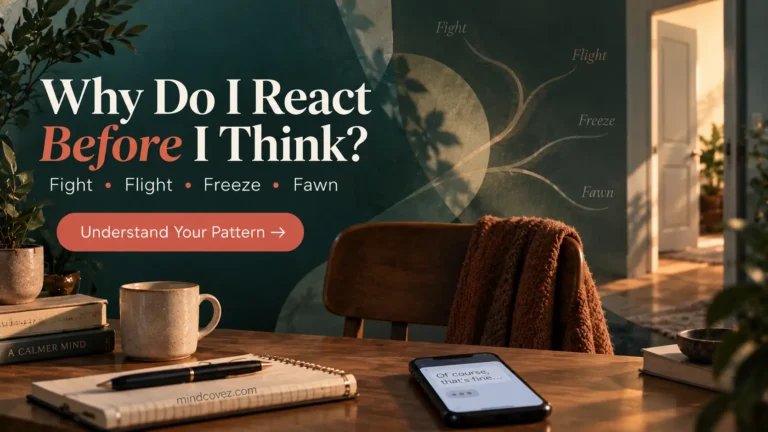
A framing I use carefully, because it can be overused, is nervous system states. Fight can show up as irritability. Flight can show up as overworking or overfunctioning. Freeze can show up as numbness and withdrawal. It is not perfect science for every person, but it maps to what many people report. It also gives a non-moral language for what is happening.
I used to avoid that language because it can sound trendy. Then I watched how quickly it reduced shame for some people. It also softened conflict when someone could say, “I think I’m in fight mode,” instead of, “You’re impossible.”
Sign #1: You’re more irritable than you used to be
One of the clearest signs burnout is changing your personality is increased irritability, especially over small things that would not have bothered you before.
What’s happening psychologically
Chronic stress reduces the brain’s ability to regulate emotions. When that regulation weakens, frustration surfaces more quickly and lingers longer.
How this shows up
You may snap, speak sharply, or feel impatient during ordinary conversations. Minor requests can feel like pressure.
Mini-anecdote
I once assumed someone close to me had simply become colder and less kind. Later, I realized they were carrying constant pressure without recovery. When that pressure lifted, the warmth returned almost immediately. The personality hadn’t changed. The nervous system had.
This might show up in ordinary moments, like these:
- A simple question: Someone asks, “How was your day?” and you answer like they interrupted something urgent.
- Repeating details: Someone repeats a story and your body tightens, like you are under attack.
- A plan changes: Someone cancels and your first thought is, “Of course,” and you reply in a way that ends the conversation.
- A follow-up message: Someone follows up and you read it as disrespect, not a reminder.
- A small mistake: You make a small mistake and your inner voice goes straight to insults.
Healthy response
Pause before personalizing the irritability. Ask: “What might be draining me right now?” or “What might be draining them right now?”
Unhealthy response
Interpreting irritability as a lack of care or respect instead of a sign of overload.
Sign #2: Your emotional range feels smaller or numb
Another subtle sign burnout is changing your personality is emotional flattening. You do not feel deeply upset, but you do not feel deeply joyful either.
What’s happening psychologically
Burnout can blunt emotional responsiveness as a way to conserve energy. This can look like calmness on the surface but is actually emotional exhaustion underneath.
Why this matters
Other people may experience this as distance. You may experience it as simply “having nothing left.”
Healthy response
Acknowledge the numbness without judging it. Numbness is a signal, not a failure.
Unhealthy response
Mistaking emotional shutdown for emotional maturity and ignoring the need for recovery.
Extra sign inside this sign: You can’t name what you feel (not just numb)
Burnout can also make it harder to identify and label emotions. You might genuinely think, “I don’t know what I’m feeling,” or “I can’t explain it.” That is not deflection. It is reduced emotional access from overload, and it is one reason communication breaks down even when you care.
I started paying more attention to this after seeing studies linking alexithymia and burnout in health and academic settings. A 2024 paper in nurses sticks in my mind, partly because it matched what I hear clinically. People are exhausted, and their emotional vocabulary shrinks. Not permanently, but noticeably.
This might show up with moments like these:
- Good news feels flat: Someone shares something exciting and you respond politely, but nothing lands. Later you feel guilty.
- You feel “behind glass”: You show up to something and feel like you are watching from the outside.
- You go blank: Someone is upset and you want to support them, but your mind is blank.
- Nothing registers much: Praise or criticism barely registers. You feel flat either way.
- You can’t sort it out: You cannot tell if you are sad, angry, or tired. You just know you are done.
Sign #3: You’re withdrawing socially (even though you still care)
Social withdrawal is one of the most common signs burnout is changing your personality, and one of the most misunderstood.
What’s happening psychologically
Social connection requires emotional energy. When burnout drains that energy, even meaningful interactions can feel exhausting.
How this shows up
You may cancel plans, delay responses, or prefer isolation, not because you do not care, but because interaction feels like another demand.
Healthy response
Communicate capacity honestly: “I care about you. I’m just running low right now.”
Unhealthy response
Disappearing without explanation or assuming you’ve “become an introvert” when the real issue is depletion.
This might show up with patterns like these:
- You go quiet: You get home and go quiet because conversation feels like another task.
- Group chats feel heavy: You stop replying because even reading messages feels like effort.
- Days pass: You keep thinking, “I’ll respond later,” and days pass.
- You avoid extra meetings: You skip optional collaboration because you cannot handle extra interaction.
- Even helpful habits stop: You stop doing activities that usually stabilize you, because even that feels like effort.
Sign #4: You feel less curious, creative, or playful
A less obvious but important sign burnout is changing your personality is the loss of curiosity and creativity.
What’s happening psychologically
Burnout narrows focus. The brain shifts from exploration to survival, favoring routine over imagination.
Why this matters
People often describe this as “losing themselves,” when in reality, creativity is one of the first things to return after recovery.
Healthy response
Allow low-pressure re-engagement with things you once enjoyed, without forcing productivity.
Unhealthy response
Assuming this loss is permanent or a sign of personal decline.
This might show up like this:
- You stop planning fun: You stop planning small treats or enjoyable activities because your brain cannot generate ideas.
- Noise feels like demand: Jokes, play, or extra stimulation feels annoying.
- You stop sending little check-ins: You used to send voice notes or quick check-ins. Now you cannot think of what to say.
- You avoid creative tasks: You stick to minimum viable work and avoid creative effort.
- Hobbies feel pointless: Hobbies feel pointless, so you default to scrolling because it asks nothing of you.
Sign #5: You’re more cynical, detached, or emotionally “checked out”
This is a big one, because it often gets mislabeled as personality change when it is actually a protective stress response. Cynicism and detachment also show up in classic burnout models, and the World Health Organization wording about mental distance echoes that.
What’s happening psychologically
When you are overloaded for too long, your mind may create distance from people and responsibilities as a way to reduce emotional strain. It can feel safer to care less than to keep caring at full volume.
How this shows up
- You’re quicker to assume the worst
- You feel less empathy, or you “can’t access” it easily
- You’re present physically, but mentally somewhere else
- You find yourself thinking, “I just don’t have it in me”
Healthy response
Treat cynicism as a warning light, not your new identity. Try: “I’m noticing I’m becoming detached. That’s usually a sign I’m overloaded.”
Unhealthy response
Deciding, “This is just who I am now,” and letting detachment become the default.
This might show up in moments like these:
- Comfort disappears: Someone shares a worry and you respond with flat pragmatism, not comfort.
- You stop engaging: You stop engaging in issues and think, “It’s not worth it.”
- You assume people disappoint: You assume people are unreliable, and you stop expecting support.
- You check out mid-conversation: You notice you are not really there, even when you’re physically present.
- You lose hope in rest: You stop believing rest helps. You start believing nothing helps.
Sign #6: You feel less capable or less confident than before
Burnout does not only drain emotion. It drains your sense of effectiveness. That shift can resemble a personality change from confident to unsure, or decisive to avoidant.
What’s happening psychologically
When your system is depleted, tasks feel heavier, and even small decisions can feel risky. Over time, you may stop trusting your own competence.
How this shows up
- Indecision or procrastination where you used to be steady
- Over-apologizing or people-pleasing to compensate
- Avoiding responsibilities you’d normally handle
Healthy response
Name it as capacity, not character: “My confidence is lower lately because I’m stretched thin.”
Unhealthy response
Hiding it with defensiveness, perfectionism, or overcontrol, which tends to deepen burnout.
This might show up like this:
- Decisions feel impossible: You avoid making decisions because you cannot carry one more consequence.
- You overcompensate: You try to prove you are fine, then crash.
- You pull back: You pull back because you feel like you have nothing to offer.
- You second-guess everything: You second-guess messages and delay tasks because you fear being exposed.
- You avoid choosing: You do not trust your choices, so you avoid choosing.
Sign #7: Your focus, memory, or mental clarity is worse
This one is surprisingly common, and often misread as laziness or carelessness.
What’s happening psychologically
Burnout can impair attention, working memory, and executive function. In plain terms, your brain has fewer resources for planning, remembering, and staying regulated.
I think of the Gavelin 2022 systematic review and meta-analysis on clinical burnout and cognition. It found broad impairments across cognitive domains, including executive function and working memory. Not every study agrees, and in non-clinical burnout the picture is messier. Koutsimani 2022 wrote about that, noting mixed findings. That uncertainty matters, because it keeps me from making claims that are too clean. But the lived experience of brain fog is real, and it can carry consequences.
How it can look like a personality change
- You seem scattered, forgetful, or slower to respond
- You lose your train of thought more often
- You avoid conversations because thinking feels like effort
Healthy response
Reduce cognitive load before you judge yourself. Externalize what you can, using lists, reminders, and simpler commitments.
Unhealthy response
Interpreting cognitive fatigue as laziness or lack of care, especially in close moments, “You never listen,” which escalates conflict.
This might show up with situations like these:
- You forget details: You forget something you were told and the other person feels dismissed.
- You miss an obligation: You miss something important and feel ashamed, then withdraw.
- You mean to reply: You intend to reply but forget. The connection feels strained.
- You reread and still miss it: You reread messages and still cannot focus. Mistakes increase.
- Basic tasks fall apart: Basic tasks feel disorganized. You judge yourself for it.
Sign #8: You feel more meaningless, pessimistic, or emotionally heavy
Sometimes burnout does not look like anger or numbness. It looks like a dimming of meaning.
What’s happening psychologically
Long-term stress can flatten motivation and shift your worldview toward “What’s the point?” That is not a personality trait. It is often a sign you have been operating without enough recovery or reward.
How this shows up
- You stop looking forward to things
- You feel trapped, resigned, or chronically “over it”
- You’re less hopeful and less emotionally available
Healthy response
Take this sign seriously and respond early. Meaning often returns when rest and boundaries return.
Unhealthy response
Normalizing it as adulthood or “just life,” and ignoring the signal until it spills into health or daily functioning.
This might show up like this:
- You stop planning ahead: You stop talking about the future because it feels pointless.
- You go through motions: You go through routines without feeling connected.
- You stop initiating: You stop initiating because you assume it will not matter.
- You disengage: You disengage because work feels meaningless.
- You lose touch with what mattered: You lose touch with what you used to care about.
Sign #9: You’re more defensive or sensitive to feedback than before
If you have noticed yourself taking things personally more often, this may be stress, not character.
What’s happening psychologically
When you are depleted, your threat system is more active. Neutral feedback can feel like criticism. Small misunderstandings can feel like rejection.
How this shows up
- You argue faster
- You assume negative intent
- You feel on edge in conversations
- You interpret questions as challenges
Healthy response
Slow the interaction down: “I’m feeling activated. I want to understand you, but I need a minute to regulate.”
Unhealthy response
Tone-matching, escalating, or turning every issue into a character verdict.
This might show up in moments like these:
- A request feels like blame: A simple request lands like an accusation.
- Advice feels controlling: Advice feels like control, and you shut down.
- Silence feels like rejection: A delayed reply feels like rejection, and you pull away.
- Feedback feels humiliating: Feedback feels humiliating, even when it is neutral.
- You shame yourself: You interpret limits as weakness and shame yourself.
Sign #10: You’re acting “out of character” with your own values (values drift)
This is one of the most personal signs burnout is changing your personality, because it can feel like you are losing identity.
What’s happening psychologically
Under chronic stress, people often shift from values-based living to survival-based living. You may start making choices for short-term relief instead of long-term meaning. Not because your values changed, but because burnout narrowed your options.
I see this in workplaces as “fit” conflicts, too. When values and environment clash, burnout risk rises. I think of organizational psychology work around person-organization fit and burnout, including a 2025 paper by Flatau-Harrison and colleagues on fit and burnout via trust. It is not the only lens, but it matches a pattern I see. When someone says, “This place is not me anymore,” sometimes it is not the place changing. It is their capacity shrinking and their compromises stacking up.
How this shows up
- You say yes when you mean no
- You avoid important conversations because they feel too hard
- You stop doing what used to matter to you
- You feel misaligned with yourself
Healthy response
Treat values drift as information: “I’m not behaving like myself lately. That’s a sign I need to reduce load and reconnect with what matters.”
Unhealthy response
Shaming yourself for it, or doubling down on the same lifestyle that created burnout in the first place.
This might show up like this:
- You agree and resent it: You agree to plans you do not want, then resent them later.
- You stop showing up: You stop showing up for traditions that used to matter to you.
- You tolerate one-sidedness: You stay in one-sided connections because boundaries feel too hard.
- You accept unrealistic demands: You accept unrealistic workloads that violate your limits.
- You abandon your basics: You abandon self-care values because survival coping feels easier.
What these signs do to daily life (and why it feels so confusing)
When burnout-driven behaviors are not recognized, they are often misinterpreted as:
- Disinterest
- Emotional unavailability
- Personality change
- Lack of effort
This is where people suffer. Not because burnout exists, but because it is misunderstood.
Once you name burnout, conversations shift:
- From blame to understanding
- From reactivity to curiosity
- From withdrawal to clarity
In my experience, simply acknowledging burnout, without fixing or diagnosing, has softened more conflicts than any communication technique.
Not all conflicts. Some people use burnout language to excuse harm. That is real. But more often, people do not want an excuse. They want a map. They want to stop hurting the people they care about. This is the decision point in real life: treat the change as a character flaw, or treat it as a capacity signal and respond early.
What to do when you notice these signs (a simple 3-step response)
When you hear it, feel it, or sense it, use this three-step approach:
- Name the pattern, not the person: “I’m noticing we both seem more reactive lately.”
- Create psychological safety: “This isn’t about blame. I want to understand.”
- Adjust expectations temporarily: Burnout requires support and pacing, not emotional performance.
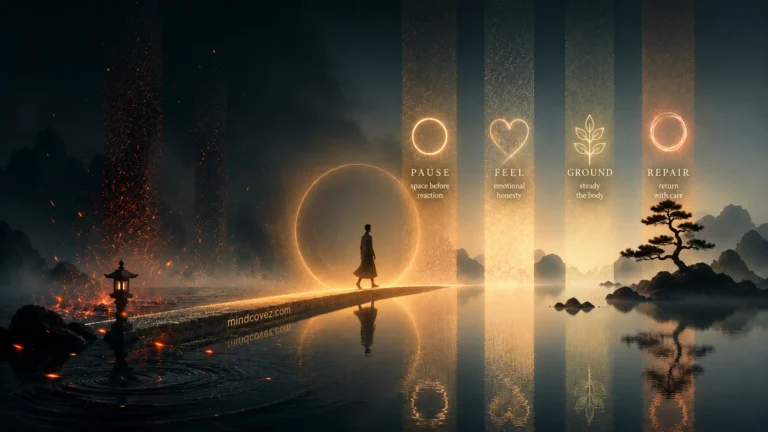
How to respond to burnout personality changes: name the pattern, create safety, adjust expectations.
Healthy vs. unhealthy interpretations of burnout personality changes
Healthy interpretations
- “This behavior is a signal.”
- “Capacity can fluctuate.”
- “Stress changes expression, not character.”
Unhealthy interpretations
- “This is just who they are now.”
- “If they cared, they’d try harder.”
- “Distance means rejection.”
The difference is compassion with boundaries, not excuses.
Actionable takeaways you can use today
- Audit your reactions. Are they stress-driven or value-driven?
- Communicate capacity early to prevent misinterpretation.
- Separate behavior from identity.
- Respond with curiosity, not conclusions.
- Treat recovery as a responsibility, not a reward.
- Start with the smallest lever you can actually move this week, a steadier sleep window, a lower load, or one honest conversation.
Main takeaway: the signs burnout is changing your personality often point to drained capacity. Respond to the signal before it becomes a bigger daily life problem.
Final thought (the decision that creates transformation)
Burnout doesn’t mean you’re broken. It means something is demanding more than your system can sustainably give.
The transformation starts when you make one decision: stop treating these signs burnout is changing your personality as permanent traits and start treating them as messages. When you do that, you regain choice, and daily life gets clearer.
And then the next question arrives, usually on a Tuesday, usually when you are tired. What exactly do I change first. The job, the boundaries, the sleep, the conversations. The part of me that keeps saying yes.
FAQ: Burnout, Personality Changes, and Daily Life
Burnout can create consistent behavior shifts: irritability, withdrawal, numbness, cynicism, defensiveness, and values drift. It can feel like personality change because it lasts. Often, it is better understood as a capacity change rather than a permanent trait change. When recovery, boundaries, and support improve, many people recognize themselves again.
Burnout can feel like a personality change, but it is often a reversible capacity change.
There is overlap, and they can co-exist, so self-diagnosis is risky. Burnout often tracks with chronic stress load (commonly work-related) and may ease when demands reduce and recovery returns. Depression more often includes persistent low mood and loss of pleasure across many areas, not just one domain. If there is persistent hopelessness, inability to function, or any self-harm thoughts, seek professional support promptly.
Keep it simple and concrete:
“I’ve been under sustained pressure.”
“I’m noticing I’m more irritable or withdrawn lately.”
“I care about this. Can we adjust expectations and choose a time to talk when I’m more regulated?”
How to talk about burnout: share context, name the change, state care, propose a next step.
References
- World Health Organization (2019)
Burn-out an “occupational phenomenon” in ICD-11
https://www.who.int/news/item/28-05-2019-burn-out-an-occupational-phenomenon-international-classification-of-diseases - Christina Maslach (2016)
Burnout experience and core dimensions
https://pmc.ncbi.nlm.nih.gov/articles/PMC4911781/ - Edú-Valsania et al. (2022)
Review of burnout theory and measurement
https://www.mdpi.com/1660-4601/19/3/1780 - Gavelin et al. (2022)
Cognitive functioning in clinical burnout (systematic review)
https://www.tandfonline.com/doi/full/10.1080/02678373.2021.2002972 - Koutsimani et al. (2022)
Cognitive functioning in non-clinical burnout
https://pmc.ncbi.nlm.nih.gov/articles/PMC9428402/ - Sun et al. (2024)
Alexithymia, burnout, anxiety, and depression
https://link.springer.com/article/10.1186/s40359-024-02262-y - Javadzadeh et al. (2024)
Alexithymia and burnout in nurses
https://www.jnursrcp.com/article_209952.html - Flatau-Harrison et al. (2025)
Person-organization fit, trust, and burnout
https://bpspsychub.onlinelibrary.wiley.com/doi/10.1111/joop.70023